








Bibimbap is more than just a meal—it’s a vibrant symbol of Korean culture served in a single bowl. Known globally for its balance of nutrition, flavor, and visual appeal,Bibimbaphas become one of the most beloved dishes in Korean cuisine.
At its core, Bibimbap combines warm rice with a variety of vegetables, protein, and a spicy-sweet sauce. The name itself translates to “mixed rice,” but the experience goes far beyond simple mixing. Every ingredient plays a role, creating a perfect harmony of taste and texture in each bite.
The Origins: A Dish Rooted in Tradition
Bibimbap has deep historical roots in Korea. Some believe it originated from royal court cuisine, while others say it was a practical way for farmers to combine leftover side dishes into one convenient meal.
Regardless of its exact origin, Bibimbap reflects a key philosophy in Korean food culture: balance. The dish often includes five colors—white, red, green, yellow, and black—representing harmony in both nutrition and aesthetics.
A Feast for the Eyes: What Makes Bibimbap Unique
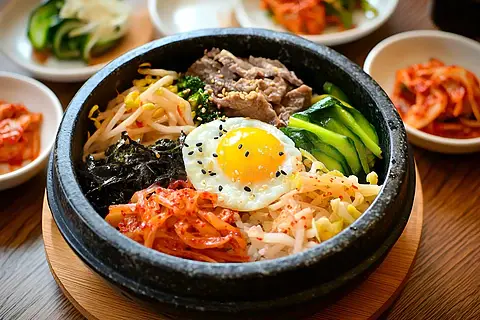
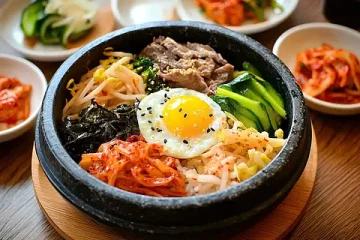
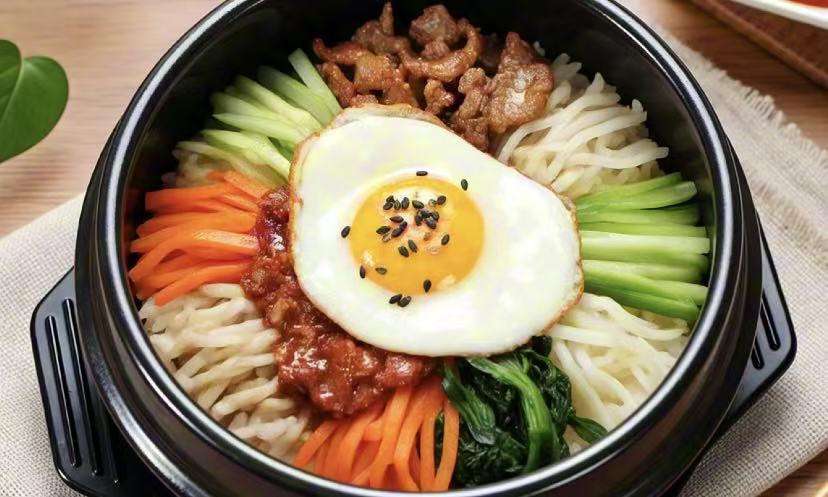
One of the most striking aspects of Bibimbap is its presentation. Before mixing, the bowl looks like a work of art.
Key Components:
- 🍚 Steamed white rice (the base)
- 🥕 Julienned vegetables (carrots, spinach, bean sprouts, zucchini)
- 🍳 Fried or raw egg (often with a runny yolk)
- 🥩 Protein (beef, chicken, tofu, or seafood)
- 🌶️ Gochujang (Korean chili paste)
Each ingredient is carefully arranged, creating a colorful and appetizing display that makes Bibimbap instantly recognizable.
Stone Bowl Magic: The Power of Heat
A special version of Bibimbap, served in a hot stone bowl, takes the dish to another level. The heated bowl crisps the rice at the bottom, creating a golden, crunchy layer known as nurungji.
This contrast between crispy rice and soft toppings adds depth and excitement to every bite. The sizzling sound when the ingredients hit the bowl is part of the experience—turning a simple meal into something memorable.
The Art of Mixing: How to Eat Bibimbap
Eating Bibimbap is interactive and fun. Before eating, you mix everything together thoroughly.
Steps to Enjoy:
- Add a spoonful of gochujang
- Break the egg yolk
- Mix all ingredients evenly
- Taste and adjust seasoning
The result? A perfect blend of spicy, savory, and slightly sweet flavors in every bite.
A Healthy Choice: Nutrition in Every Bowl
Bibimbap is often praised as a healthy dish, and for good reason:
- Rich in vegetables → high in vitamins and fiber
- Balanced protein options → supports muscle health
- Moderate calories → suitable for many diets
- Customizable → vegetarian and vegan-friendly
This balance makes Bibimbap not just delicious, but also nourishing.
Global Popularity: From Korea to the World
In recent years, Bibimbap has gained international fame. Korean restaurants around the world proudly feature it on their menus, and food lovers everywhere appreciate its versatility.
From New York to Paris, Bibimbap represents a modern global trend: meals that are both healthy and visually appealing.
Why Bibimbap Stands Out
In a world full of fast food and processed meals, Bibimbap offers something different:
- A connection to tradition
- A visually stunning presentation
- A customizable eating experience
- A perfect balance of nutrition and flavor
It’s not just food—it’s an experience that engages all the senses.
A Bowl Worth Discovering
Bibimbap is a true masterpiece of Korean cuisine. With its colorful ingredients, rich history, and satisfying flavors, it continues to win hearts around the world.
Whether you try it in a traditional Korean restaurant or make it at home, Bibimbap offers a unique and unforgettable dining experience. One bowl is all it takes to understand why this dish has become a global favorite.
